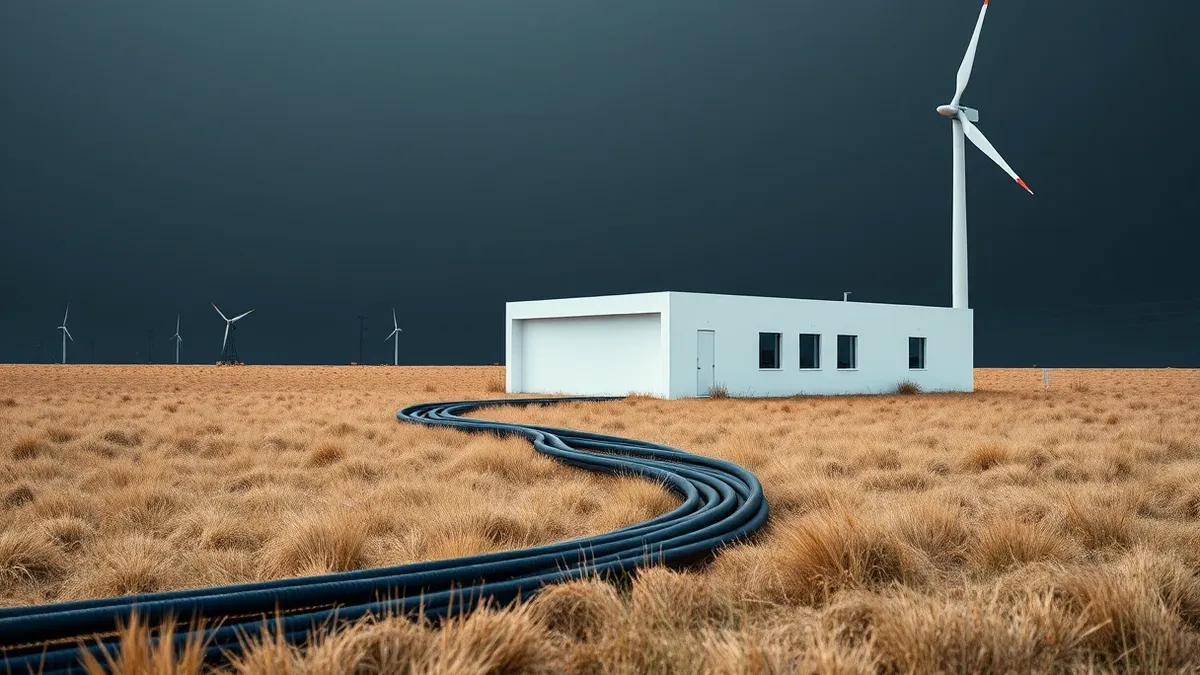
Key points
- SemiAnalysis reports an 800MW wind-powered AI campus under construction in Inner Mongolia.
- A 120MW portion of the facility was built within a single year, according to the report.
- The site features a 5MW pilot using SST-native 800V DC power and chiller-free cooling.
SemiAnalysis detailed the deployment of a 5MW server-side transformation native 800-volt direct current pilot within a larger AI infrastructure project in Inner Mongolia.reported This specific technical pilot represents the newest documented capability in a region SemiAnalysis identifies as China's fastest-growing hub for AI data centers.A new AI data center in China is using wind power and testing new electricity systems.The 5MW SST-native 800V DC pilot signals a shift in power architecture for AI infrastructure. The report highlights how this electrical architecture supports the broader campus design.
Evidence: reported
Inside Inner Mongolia, China's fastest-growing AI data center region, where construction is accelerating with low building cost and no public backlash (SemiAnalysis)aifleet-techmeme
What it does
The facility operates as an 800MW wind-powered campus designed for artificial intelligence workloads.reported According to SemiAnalysis, the complex utilizes a cooling design that eliminates the need for central chillers.reported This approach reduces the mechanical infrastructure typically required for large-scale data centers. The 5MW pilot specifically tests the efficiency of direct current power delivery at the server level.reported
Evidence: reported
Inside Inner Mongolia, China's fastest-growing AI data center region, where construction is accelerating with low building cost and no public backlash (SemiAnalysis)aifleet-techmeme
Evidence: reported
Inside Inner Mongolia, China's fastest-growing AI data center region, where construction is accelerating with low building cost and no public backlash (SemiAnalysis)aifleet-techmeme
Evidence: reported
Inside Inner Mongolia, China's fastest-growing AI data center region, where construction is accelerating with low building cost and no public backlash (SemiAnalysis)aifleet-techmeme
How to get it
SemiAnalysis reported that construction is accelerating in Inner Mongolia due to low building costs.reported The region lacks public backlash against such developments, facilitating rapid expansion. The report notes that a 120MW segment of the campus was completed within a year, demonstrating the speed of deployment in this specific geographic and regulatory context.reported
Evidence: reported
Inside Inner Mongolia, China's fastest-growing AI data center region, where construction is accelerating with low building cost and no public backlash (SemiAnalysis)aifleet-techmeme
Evidence: reported
Inside Inner Mongolia, China's fastest-growing AI data center region, where construction is accelerating with low building cost and no public backlash (SemiAnalysis)aifleet-techmeme
Limits
The source material does not specify technical limitations, failure rates, or performance benchmarks for the 800V DC pilot or the chiller-free cooling system.reported SemiAnalysis does not provide data on energy efficiency gains compared to traditional cooling methods. The report focuses on construction speed and cost rather than operational metrics or uptime guarantees for the AI workloads housed there.
Evidence: reported
Inside Inner Mongolia, China's fastest-growing AI data center region, where construction is accelerating with low building cost and no public backlash (SemiAnalysis)aifleet-techmeme
The takeaway
The combination of low construction costs and wind power availability allows for rapid scaling of AI infrastructure in Inner Mongolia. SemiAnalysis suggests that the absence of public opposition further accelerates this build-out. The technical experiments with direct current and passive cooling indicate a shift toward more efficient, albeit unproven at scale, architectural designs for high-density computing environments in this region.
Building on this
Data science teams interested in infrastructure optimization can observe the 5MW SST-native 800V DC pilot as a reference for power delivery efficiency.reported The chiller-free cooling design offers a template for reducing mechanical overhead in new facility designs. However, without published performance data, teams cannot yet replicate these specific engineering choices. The rapid 120MW build timeline suggests that location selection in regions with low regulatory friction and abundant renewable energy can significantly shorten deployment cycles for large-scale AI training clusters.reported
Evidence: reported
Inside Inner Mongolia, China's fastest-growing AI data center region, where construction is accelerating with low building cost and no public backlash (SemiAnalysis)aifleet-techmeme
Evidence: reported
Inside Inner Mongolia, China's fastest-growing AI data center region, where construction is accelerating with low building cost and no public backlash (SemiAnalysis)aifleet-techmeme
Why it matters
- The 800V DC pilot provides a concrete example of power architecture experimentation in AI hardware, relevant for infrastructure engineers.
- The chiller-free cooling design indicates a potential reduction in operational complexity and energy consumption for data centers.
- The rapid construction timeline in Inner Mongolia highlights how regional policy and cost factors influence global AI infrastructure deployment speeds.
- The wind-powered nature of the campus addresses sustainability concerns for large-scale AI compute, though specific carbon metrics are not provided.
Topics: data centers, power architecture, AI infrastructure, cooling systems
Updated
Then / now / next
AI data center construction faced higher costs and public resistance in many regions.
Inner Mongolia sees accelerated construction with low costs and no public backlash.
Developers should watch for performance data from the 5MW DC pilot.
Story timeline
- Then AI data center construction faced higher costs and public resistance in many regions.
- 08 Nov 2026 Inside Inner Mongolia, China's fastest-growing AI data center region, where construction is accelerating with low building cost and no public backlash (SemiAnalysis)
- Now Inner Mongolia sees accelerated construction with low costs and no public backlash.
- Next Developers should watch for performance data from the 5MW DC pilot.
The strongest doubt
Counterpoint from the sources
SemiAnalysis does not provide independent verification of the cooling efficiency or the long-term reliability of the chiller-free design.
For readers
Developers
- Observe the 5MW 800V DC pilot for power delivery insights.
- Note the chiller-free cooling design for infrastructure planning.
Investors
- Monitor Inner Mongolia as a low-cost AI infrastructure hub.
- Track the rapid 120MW build timeline for market timing.
Policy
- Note the lack of public backlash in Inner Mongolia.
- Observe the integration of wind power into AI data centers.
Ask the article
Local keyword search of this article; no generated answers.Did this article give you the evidence you needed?
Your choice stays on this device. No public tally.Terms in this story
SST-native
Server-side transformation native architecture.
800V DC
800-volt direct current power delivery system.
Chiller-free cooling
Cooling design without central chillers.
Questions readers ask
What is the capacity of the wind-powered AI campus in Inner Mongolia?
SemiAnalysis reports the campus has a total capacity of 800MW.
How much of the facility was built in one year?
A 120MW portion of the campus was built within a year, according to the published report
What technical pilot is being tested at the site?
The site features a 5MW SST-native 800V DC pilot.
Connected stories
Reading receipt
- SemiAnalysis reports an 800MW wind-powered AI campus under construction in Inner Mongolia.
- A 120MW portion of the facility was built within a single year, according to the report.
- The site features a 5MW pilot using SST-native 800V DC power and chiller-free cooling.
Still open: What are the specific energy efficiency metrics of the chiller-free cooling system?
Still open: How does the 800V DC pilot perform under peak AI training loads?