Key points
- Bastian Recha demonstrated Mausstudio on October 28, showing it generates shells from imported STL files of mouse PCBs.
- The software detects component locations such as buttons, sensors, and screw holes to create precise cutouts and stems.
- The project runs locally without generative AI, relying on mathematical algorithms for geometry generation.
Bastian Recha, known online as Unskilledcast, demonstrated a new software project called Mausstudio on October 28. The tool generates customizable 3D-printable mouse shells by analyzing imported STL files of mouse printed circuit boards.reportedBastian Recha showed a program that makes custom mouse covers by scanning the internal circuit board, without using AI.The demonstration reveals a deterministic pipeline for mapping PCB component coordinates to parametric shell geometry in a local environment. According to Tom's Hardware, the demonstration highlighted how the software creates precise enclosures without using artificial intelligence.reported
Evidence: reported
Former esports commentator builds his own custom mouse shell generator for 3D printing that doesn’t use AIaifleet-tomshardware
Evidence: reported
Former esports commentator builds his own custom mouse shell generator for 3D printing that doesn’t use AIaifleet-tomshardware
What it does
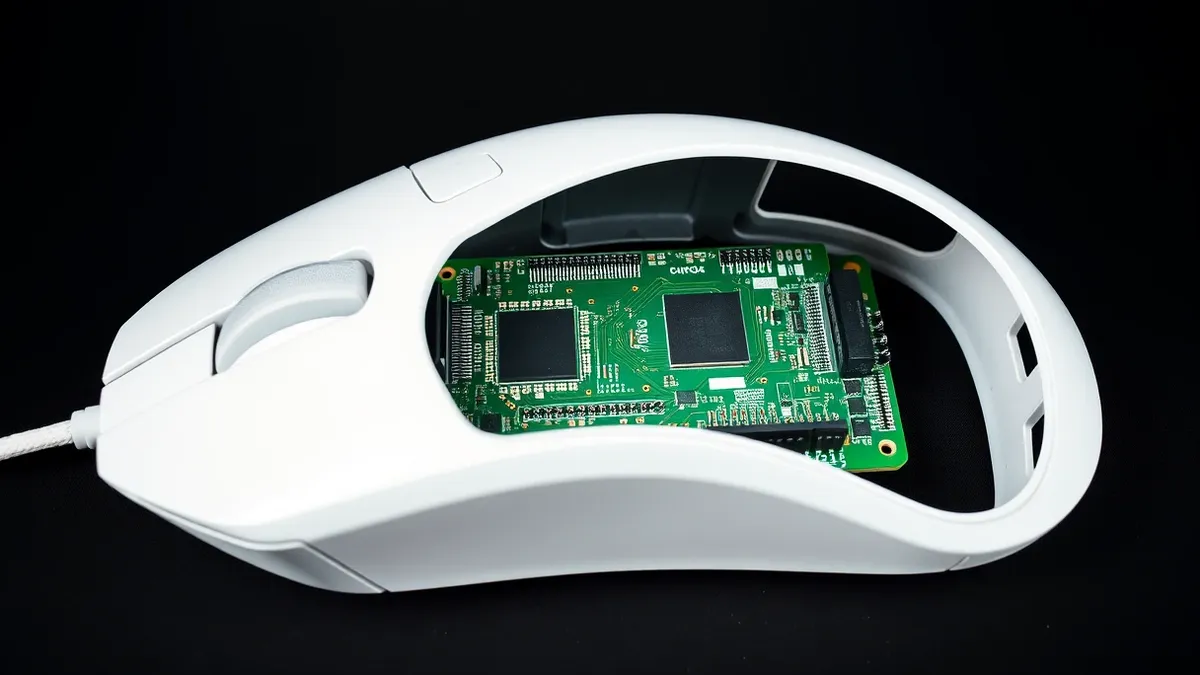
Mausstudio imports an STL file of a mouse PCB, such as the Razer Viper V2 Pro or Zaunkoenig M2K models shown in the demo.reported The software then detects the specific locations of key components, including mouse button switches, the sensor, the scroll wheel, and screw holes. It generates a shell around these components, adding stems to reach switches, cutouts for the wheel, buttons for side switches, and base openings for the sensor. Users can adjust the overall width, length, and height of the mouse, including the position of the hump. The tool also allows for weight-reducing cutouts in the upper and lower shells, with an option for a fully enclosed design. A battery shelf feature lets users input battery dimensions to customize placement, addressing a common issue where battery placement is an afterthought in custom builds.
Evidence: reported
Former esports commentator builds his own custom mouse shell generator for 3D printing that doesn’t use AIaifleet-tomshardware
How to get it
Recha posted the demonstration video on X after a six-day period of inactivity. He stated that he had been working on the project but has not announced a release date. There is no information regarding whether the software will be free or paid. An update posted alongside the demo indicated improvements since the initial recording, including the ability to edit detected component assignments, more control over side buttons, saving shell designs for use on other PCBs, and cleaner geometry.
Limits
The software runs completely locally and does not use generative AI, relying instead on math and algorithms. It is unclear if the current version can handle split PCBs, such as those found in the G Pro X Superlight. Support for such hardware may come in the future, but it is not confirmed in the current demonstration.
The takeaway
The project emphasizes deterministic geometry generation over generative models for hardware customization. By focusing on precise component detection and local processing, the tool offers a transparent workflow for creating custom peripheral enclosures. The lack of AI involvement means the output is directly tied to the input STL data and user-defined parameters.
Building on this
Data science teams can examine the algorithmic approach used for component detection in STL files. The software identifies specific geometric features like switch locations and screw holes, suggesting a rule-based or computational geometry method rather than machine learning. The ability to save shell designs for reuse on different PCBs indicates a modular design pattern. Teams building local-first applications can reference the architecture that runs entirely offline, avoiding cloud dependencies for geometry processing. The battery shelf customization feature demonstrates how parameterized inputs can drive structural changes in 3D models, a technique applicable to other hardware design tools.
Why it matters
- The tool demonstrates that complex 3D geometry generation for hardware can be achieved with deterministic algorithms, offering an alternative to AI-driven design tools.
- Local processing ensures that proprietary PCB designs remain on the user's machine, addressing privacy concerns for hardware developers.
- The explicit detection of component locations provides a structured data layer for physical objects, which can be useful for automated manufacturing workflows.
- The focus on battery placement customization highlights a practical engineering constraint that is often overlooked in generic 3D printing templates.
Topics: 3D printing, CAD automation, hardware design, local AI, peripherals
Updated
Then / now / next
Custom 3D-printed mice often required manual design work or generic templates with poor battery placement.
Mausstudio offers an automated way to generate custom shells from specific PCB data without AI.
Watch for a release date and potential support for split PCB architectures in future updates.
Story timeline
- Then Custom 3D-printed mice often required manual design work or generic templates with poor battery placement.
- 30 Oct 2026 Former esports commentator builds his own custom mouse shell generator for 3D printing that doesn’t use AI
- Now Mausstudio offers an automated way to generate custom shells from specific PCB data without AI.
- Next Watch for a release date and potential support for split PCB architectures in future updates.
The strongest doubt
Counterpoint from the sources
The software's ability to handle complex hardware designs like split PCBs remains unverified and may require future development.
For readers
Developers
- The tool uses deterministic algorithms for geometry generation, offering a case study in local-first CAD automation.
- Component detection from STL files demonstrates a method for extracting structured data from 3D models.
Consumers
- Custom mouse shells can be generated precisely from specific PCB models, improving fit and function.
- Battery placement is customizable via input dimensions, addressing a common pain point in DIY mouse builds.
Researchers
- The project highlights the viability of non-AI approaches for complex 3D geometry generation tasks.
- Local processing requirements may influence how hardware design tools are architected for privacy and performance.
Ask the article
Local keyword search of this article; no generated answers.Did this article give you the evidence you needed?
Your choice stays on this device. No public tally.Questions readers ask
Does Mausstudio use artificial intelligence to generate the mouse shells?
No, the software runs locally using math and algorithms, without any generative AI components.
Can the software handle split PCBs like the G Pro X Superlight?
It is currently unclear if the software supports split PCBs, though future updates may add this capability.
Is there a release date for Mausstudio?
Bastian Recha has not announced a release date or pricing model for the project.
Reading receipt
- Bastian Recha demonstrated Mausstudio on October 28, showing it generates shells from imported STL files of mouse PCBs.
- The software detects component locations such as buttons, sensors, and screw holes to create precise cutouts and stems.
- The project runs locally without generative AI, relying on mathematical algorithms for geometry generation.
Still open: Will the software support split PCB architectures in future updates?
Still open: Is the project intended to be free or paid upon release?