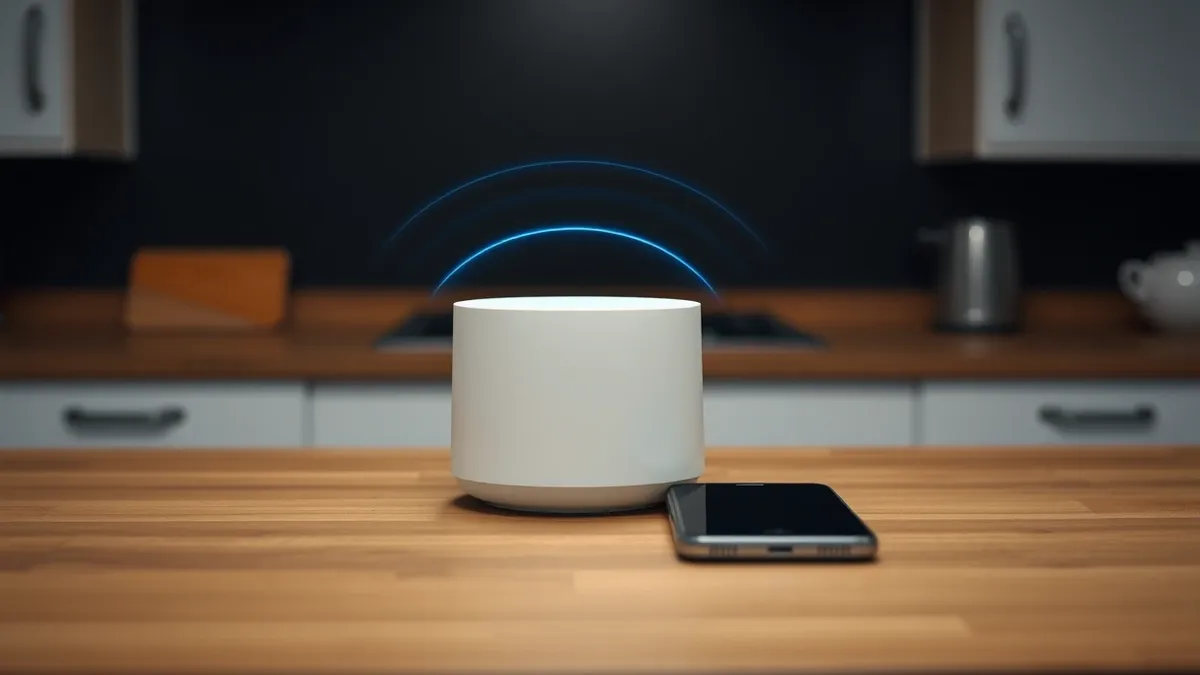
Key points
- HomeView lacks its own app store, relying on the iPhone for its application engine.
- User personalization is determined by iPhone proximity rather than facial recognition.
- The device features a square display with widgets, distinct from traditional tablet layouts.
This approach allows the device to recognize who is interacting with it, contrasting with competitors who have long featured cameras for personalized experiences.
What it does
The HomeView serves as a touchscreen family hub with a square 1:1 aspect ratio and a widget-driven display.reported
How to get it
Apple unveiled the HomeView during its home product launch on October 13.reported The device can be mounted on a wall or placed on a domed aluminum speaker base that resembles the texture of a Mac mini, differing from the cloth styling of the HomePod mini.
Limits
HomeView does not have its own app store. Instead, it borrows its platform philosophy from CarPlay, presenting applications that are installed on a connected iPhone.
The takeaway
Fast Company suggests this device signals a shift away from Apple’s traditional app-first ecosystem toward a Siri-led future. By leveraging the iPhone for personalization and app engines, Apple aims to provide richer on-the-fly customization than competitors who rely on cameras or separate profiles.
Building on this
Developers should note that HomeView extends the CarPlay model to the home environment. Since the hub lacks a native app store, building for this platform likely involves optimizing existing iPhone apps for a square, widget-centric display. The proximity-based personalization implies that context-aware features tied to the user’s phone location will be central to the experience, rather than device-local identity management.
Why it matters
- Developers must adapt existing iPhone applications for a square, widget-driven interface rather than building new standalone apps.
- The reliance on iPhone proximity for personalization changes how user context is detected, using phone location instead of camera-based methods.
- The absence of a native app store limits distribution models, tying the hub’s functionality directly to the connected phone’s ecosystem.
- The shift toward Siri-led interactions suggests voice and multimodal inputs will be primary engagement methods on this hardware.
Topics: Apple, HomeView, Siri, CarPlay, Smart Home
Updated
Then / now / next
Apple focused on an app-first ecosystem with millions of downloads for its mobile devices.
HomeView introduces a Siri-led, widget-centric hub that relies on iPhone proximity for personalization.
It remains to be seen how developers will adapt their iPhone apps for this new square interface.
Story timeline
- Then Apple focused on an app-first ecosystem with millions of downloads for its mobile devices.
- 01 Nov 2026 How HomeView foreshadows Apple’s post-app, Siri-first future
- Now HomeView introduces a Siri-led, widget-centric hub that relies on iPhone proximity for personalization.
- Next It remains to be seen how developers will adapt their iPhone apps for this new square interface.
The strongest doubt
Counterpoint from the sources
Fast Company notes that while HomeView offers a standalone experience, its lack of a native app store may limit its independence compared to competitors with their own ecosystems.
For readers
Developers
- Optimize iPhone apps for a square, widget-centric display similar to CarPlay.
- Leverage iPhone proximity data for user-specific context.
Consumers
- Personalization relies on your iPhone being nearby.
- The device serves as a hub for home controls and media without a separate app store.
Investors
- Apple is shifting strategy from app downloads to integrated, Siri-driven home services.
Ask the article
Local keyword search of this article; no generated answers.Did this article give you the evidence you needed?
Your choice stays on this device. No public tally.Terms in this story
HomeView
Apple's new touchscreen family hub with a square display and widget-driven interface.
CarPlay
Apple's system that presents iPhone apps on automotive dashboard displays, serving as a model for HomeView.
Proximity-based personalization
Using the location of a nearby iPhone to determine user identity and customize the experience.
Questions readers ask
Does HomeView have its own app store?
No, Fast Company reports that HomeView does not have its own app store and relies on apps installed on a connected iPhone.
How does HomeView identify users?
The device uses iPhone proximity to determine who is using it, enabling personalization.
What is the aspect ratio of the HomeView display?
The HomeView features a 1:1 square aspect ratio with a widget-driven display.
Connected stories
Reading receipt
- HomeView lacks its own app store, relying on the iPhone for its application engine.
- User personalization is determined by iPhone proximity rather than facial recognition.
- The device features a square display with widgets, distinct from traditional tablet layouts.
Still open: How will developers monetize apps that run on HomeView without a native store?
Still open: What specific multimodal interactions will the reinvented Siri support on this device?